How to choose the right kitchen appliances
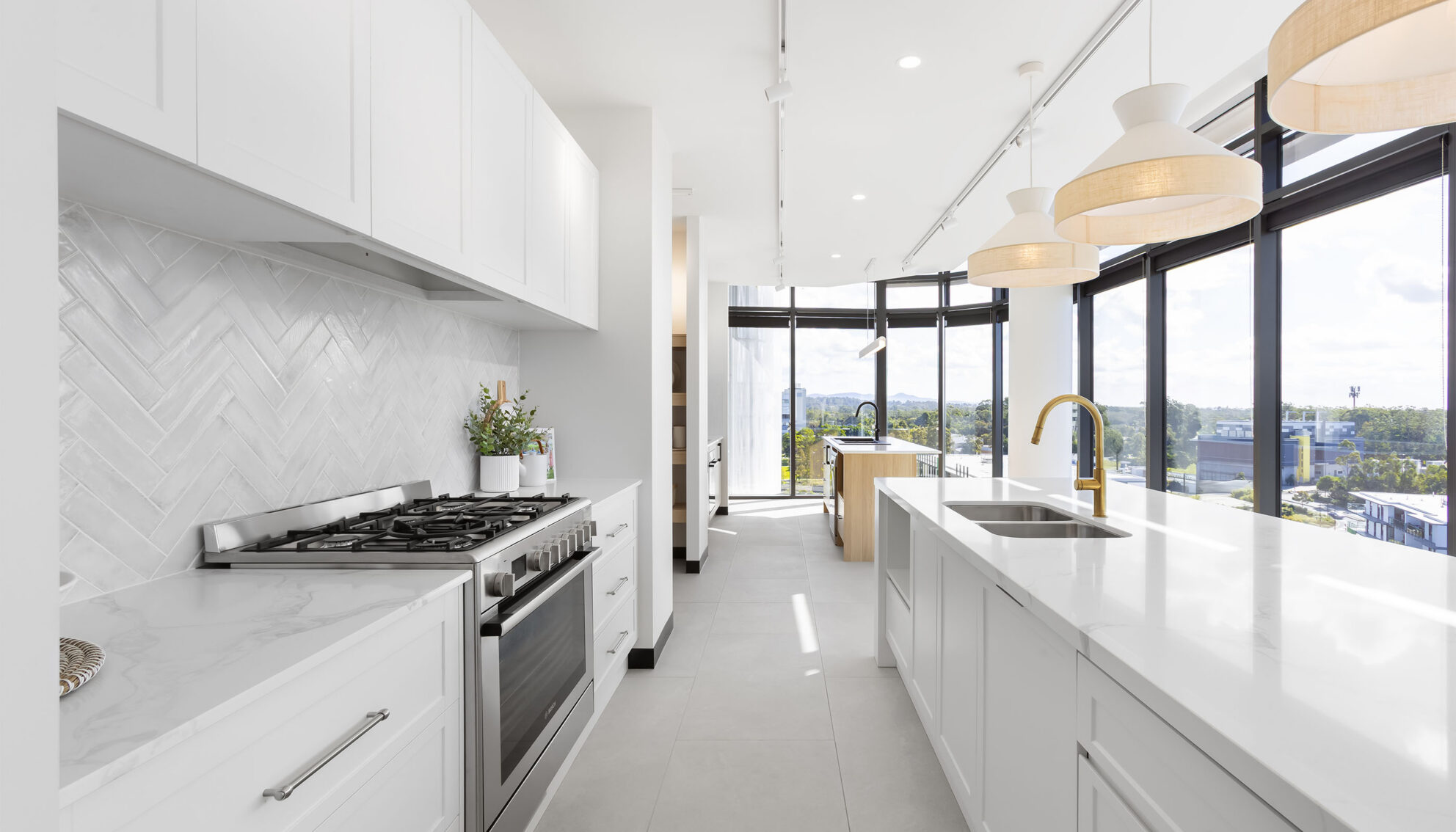
The kitchen is the most used room in the house, and the appliances inside it shape how you cook, clean and spend time with the people you care about. Getting those choices right before construction begins is one of the most valuable things you can do as a new home builder.
Unlike a renovation, where you are working around existing cabinetry and plumbing, building new gives you complete freedom to plan your appliances from scratch. You can match your cooking habits, your household size and your kitchen layout without compromise.
This guide walks through the key decisions involved in choosing kitchen appliances for a new home, from cooktops and ovens to rangehoods, dishwashers and fridges, with practical advice on what actually matters and how the inclusions packages at Hallmark Homes fit into the picture.
Before comparing brands or specifications, take a step back and think about how you actually cook. A household that batch-cooks on weekends has different needs to one that heats up meals quickly on weeknights. A family that entertains frequently needs different capacity and layout considerations to a couple cooking for two.
A few questions worth asking before you start:
Your answers will shape almost every appliance decision that follows. Building a kitchen around how you actually live, rather than how a display home looks, is what makes the difference between a kitchen you enjoy for years and one you quietly wish you had done differently.
The cooktop decision is one of the most consequential choices you will make in the kitchen. It affects how you cook every single day, the overall aesthetic of the space and, increasingly, your running costs and environmental footprint.
Gas offers instant heat and the visual feedback of a visible flame, which many experienced cooks prefer. It works with any cookware, responds quickly to temperature changes and performs well for high-heat cooking like stir-frying or searing. The drawback is that the burner grates and surrounding surfaces require more cleaning effort, and gas appliances are gradually becoming less common in new builds as induction technology matures.
Induction is the most energy-efficient cooktop option available. It uses electromagnetic technology to heat the cookware directly rather than the cooking surface, which means it is faster to heat, more responsive to temperature changes and significantly easier to clean since the surface itself does not get hot enough to burn spills. Induction also reduces ambient heat in the kitchen, which matters in South East Queensland.
The one consideration is cookware compatibility. Induction requires magnetic-based pots and pans, so if your existing cookware is not compatible you will need to replace it. This is worth factoring into your overall budget.
The Hallmark Homes Harmony inclusions package features a Bosch 60cm 4 Zone Electric Cooktop, while the Inspire Luxury package offers a choice of Bosch Series 6 Induction Cooktops in 60cm or 80cm configurations, or the option of a Bosch 90cm Dual Fuel Upright Cooker that integrates both cooktop and oven in one unit. You can review the full details across both packages on the Harmony Inclusions and Inspire Luxury Inclusions pages.
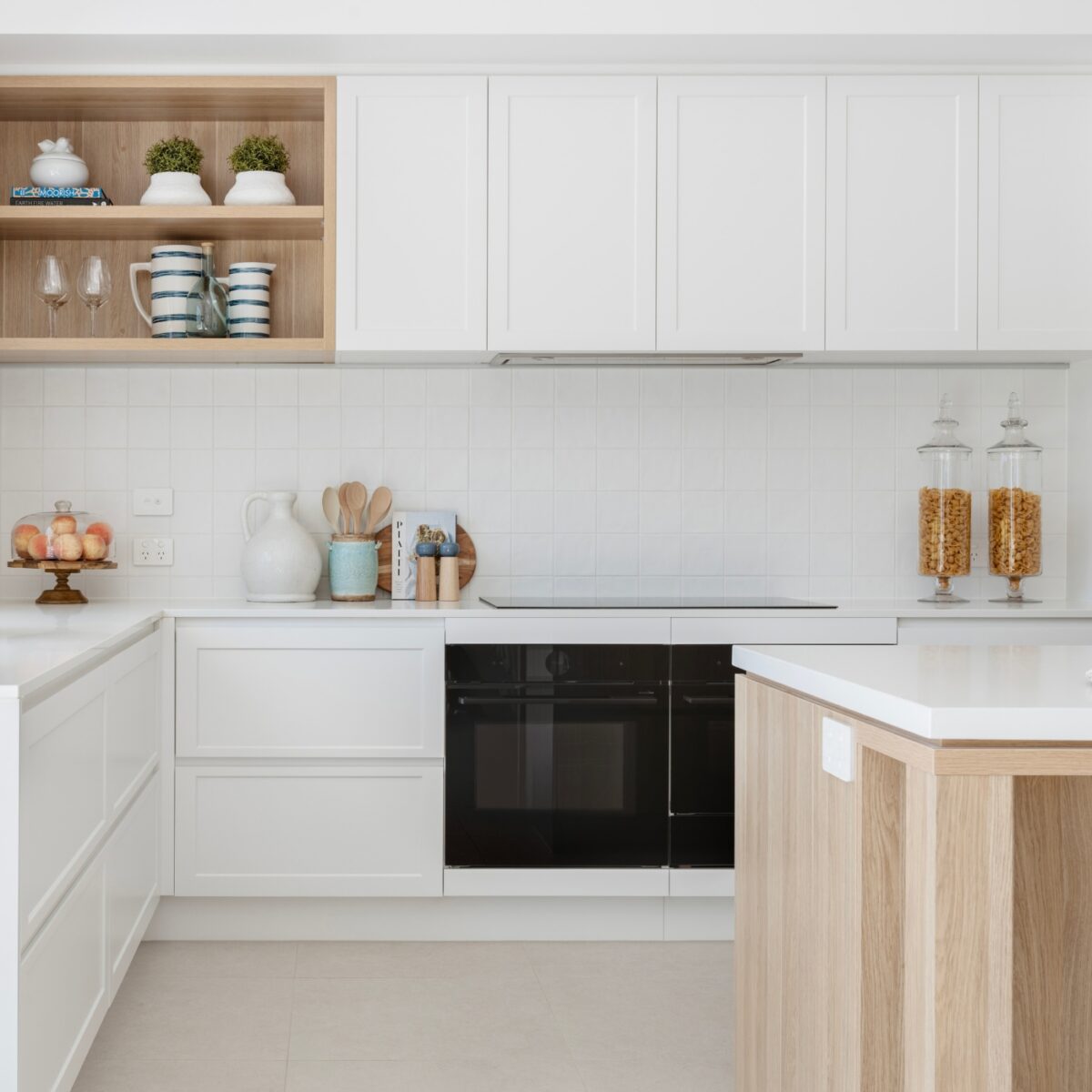
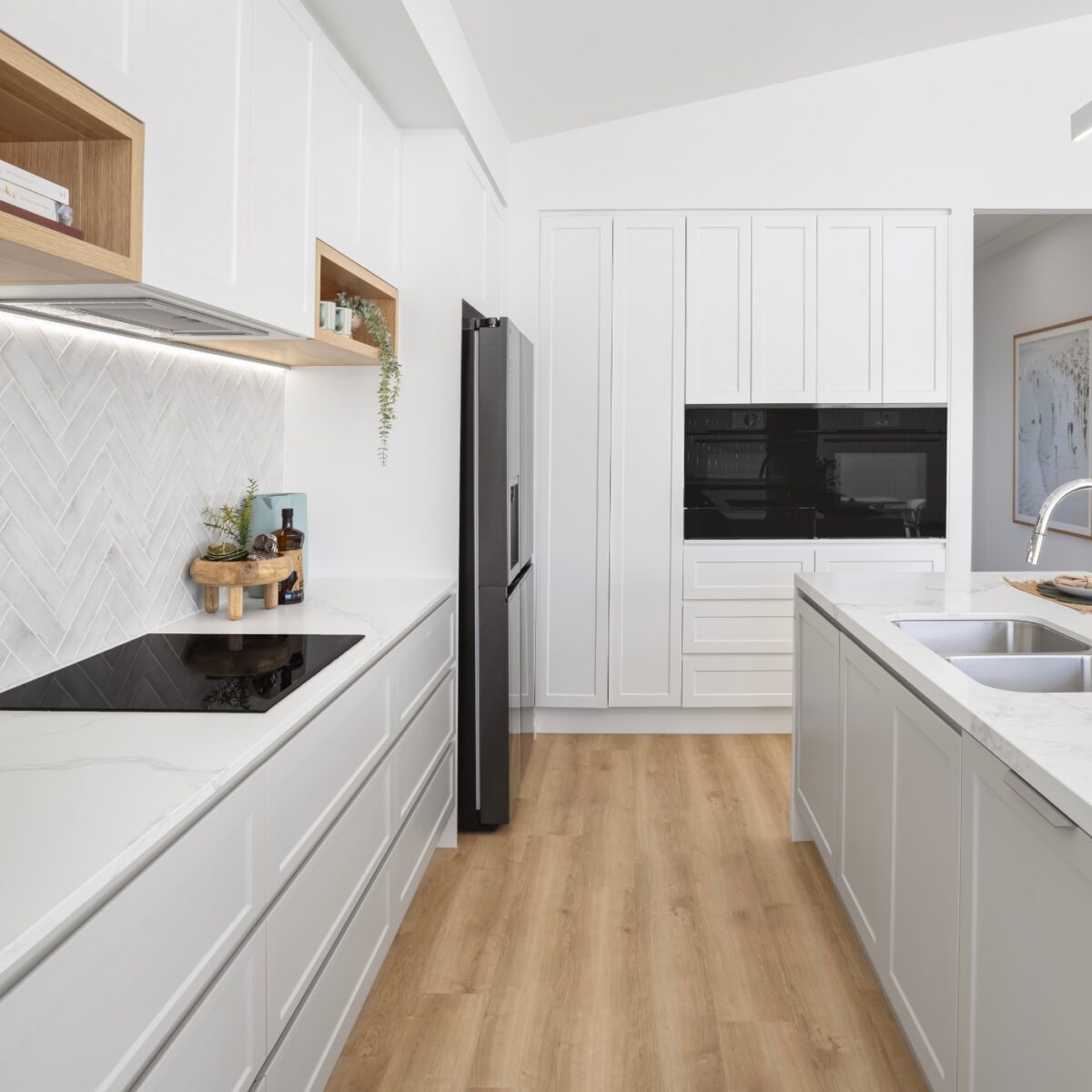
The choice between a built-in wall oven and a freestanding cooker comes down to kitchen layout, how you cook and personal preference.
A built-in oven installed at eye level or bench height is ergonomically convenient and creates a cleaner, more integrated aesthetic. It separates the oven from the cooktop, which suits households where multiple people are often cooking at the same time. For smaller kitchens, a built-in oven also frees up the floor area that a freestanding cooker would occupy.
A freestanding cooker combines the cooktop and oven in a single unit, making it a practical choice for kitchens where wall space for a built-in oven is limited. They are also generally more straightforward to replace or upgrade later.
A pyrolytic oven uses extremely high temperatures to incinerate food residue inside the cavity, reducing oven cleaning to a simple wipe-down. If keeping the oven clean feels like a chore you would rather not deal with, the pyrolytic function is worth the upgrade.
The Hallmark Homes Harmony inclusions package includes a Bosch 60cm 5 Function Built-In Oven. The Inspire Luxury package steps up to a Bosch Series 4 Pyrolytic Oven or a Bosch Series 6 Pyrolytic Oven at 90cm, depending on the configuration you choose. The pyrolytic function is one of the upgrades our Inspire clients consistently appreciate once they are living in the home.
A rangehood is not a cosmetic feature. It is a functional necessity that protects your kitchen cabinetry, walls and air quality from grease, steam and cooking odours. In a new home, choosing the right rangehood at the design stage means it will be properly integrated into both the cabinetry layout and the ventilation system.
The main rangehood types to consider are:
The Harmony inclusions package includes a Bosch 60cm Canopy Rangehood. Inspire Luxury clients can choose between a Bosch 53cm Ducted Undermount Rangehood or the premium Bosch Series 8 Integrated Rangehood at 86cm, depending on the appliance configuration selected.
Almost every new home includes a dishwasher, but there is more variation between models than most people realise. Once you have settled on a finish that matches your kitchen appliances, the factors worth comparing are:
All Hallmark Homes Inspire Luxury appliance configurations include a Bosch 60cm Series 2 Freestanding Dishwasher as standard.
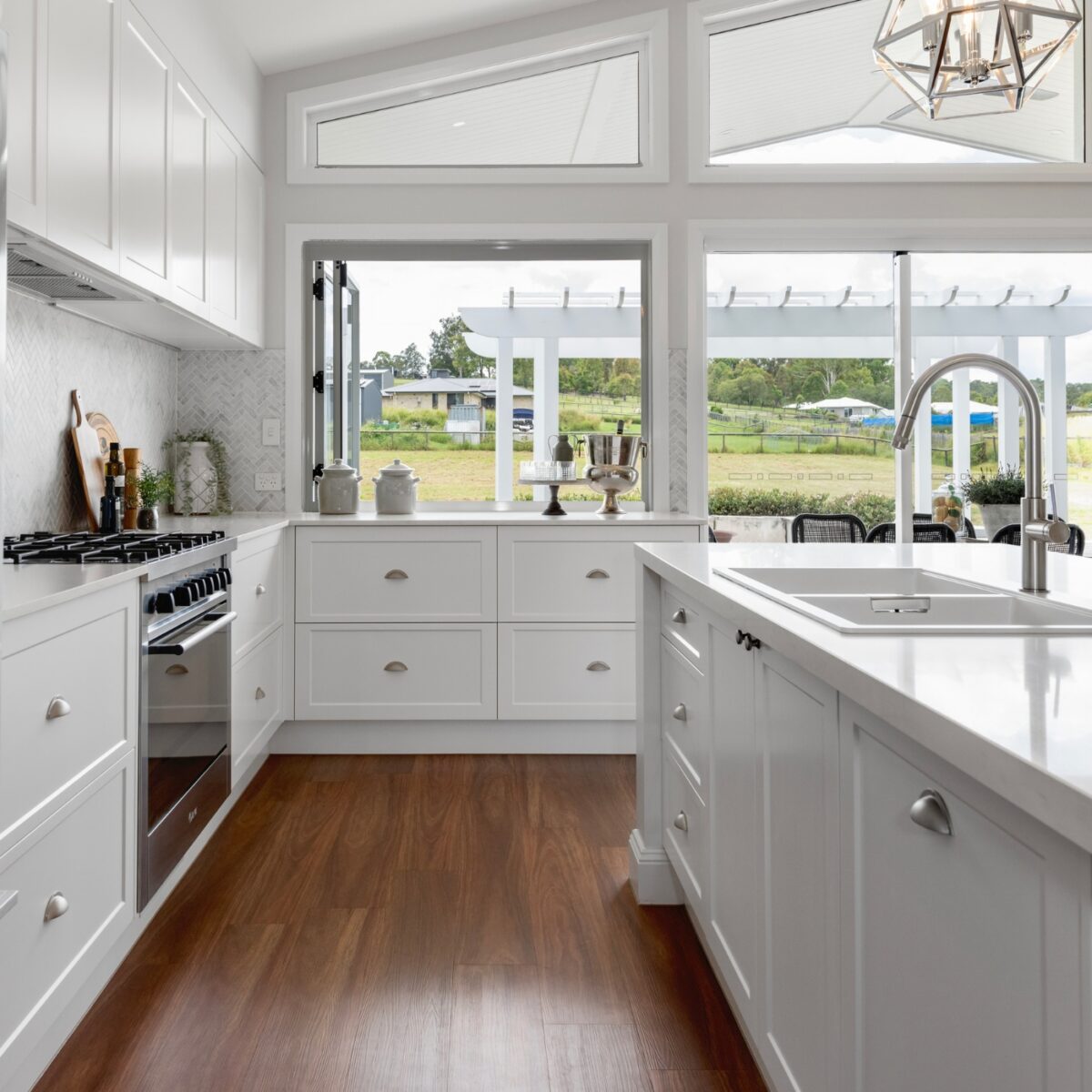
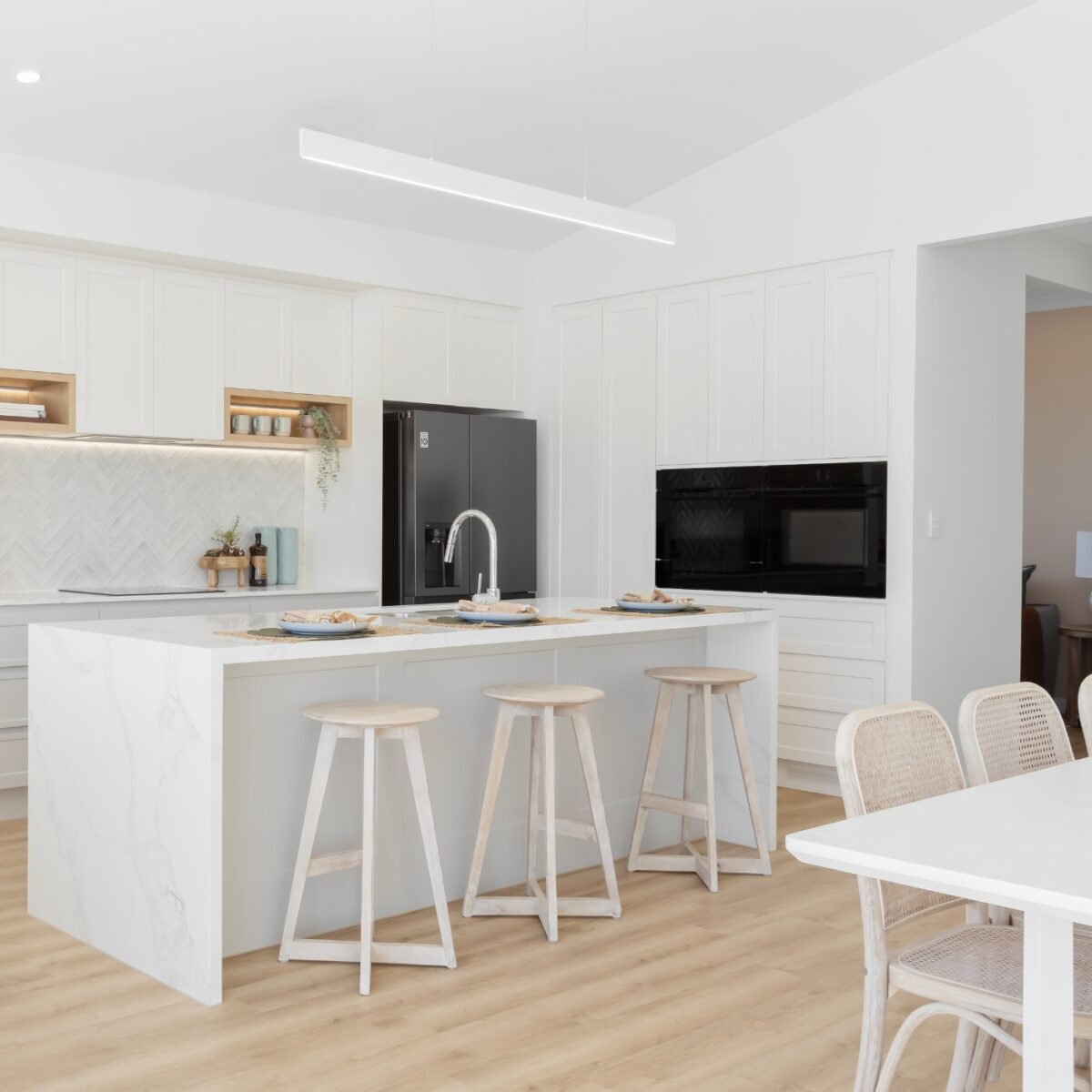
The refrigerator is typically the largest appliance in the kitchen and one of the most personal choices you will make. Unlike ovens and cooktops, fridges are usually supplied by homeowners rather than included in a builder’s package, which means you have full flexibility to choose the model that suits your household.
A few key considerations:
It is worth discussing fridge cavity sizing with your Hallmark design consultant early in the process. A cavity that is too narrow limits your future appliance choices, while one that is too wide leaves an awkward gap. Getting it right at design stage means you can slot in the fridge of your choice now and upgrade easily in the future.
Energy ratings are often treated as a secondary consideration, but they have a direct impact on the cost of running your home over time. In Australia, appliances are rated under the Energy Rating Label scheme. The more stars, the more energy-efficient the appliance.
Induction cooktops are the most energy-efficient cooking option available, followed by electric cooktops. Gas has higher running costs when measured against electricity from a solar system. Pyrolytic ovens use a significant amount of energy during the cleaning cycle, though this is offset by how infrequently the cycle needs to run.
When comparing appliances of similar specification, a higher energy rating can save hundreds of dollars over the life of the appliance. If you are building with solar panels, energy-efficient appliances compound those savings further.
Once the functional decisions are made, finish and aesthetic consistency become the focus. The three most common appliance finishes in Australian kitchens are stainless steel, black and white. Each has its own considerations:
The most important principle is consistency. Mixing finishes without intention can make a kitchen feel disjointed. If your tapware is matte black, carrying that through to appliance handles or accessories reinforces a considered design direction.
Smart appliances, those that connect to your home network or can be controlled via an app, have become increasingly mainstream. Some Bosch appliances, for example, offer Home Connect functionality that allows you to monitor and control the appliance remotely, receive notifications when cooking cycles are complete and access guided cooking programs.
Whether smart features are worth the investment depends on how you cook and how much you value the convenience of remote control. For most households, the connected features are genuinely useful for things like preheating the oven on the way home or monitoring the dishwasher cycle. For others, the added complexity of another app is not a priority.
If smart home integration is important to you, it is worth flagging early in the design process so your home is wired appropriately and your kitchen inclusions are aligned with your broader smart home setup.
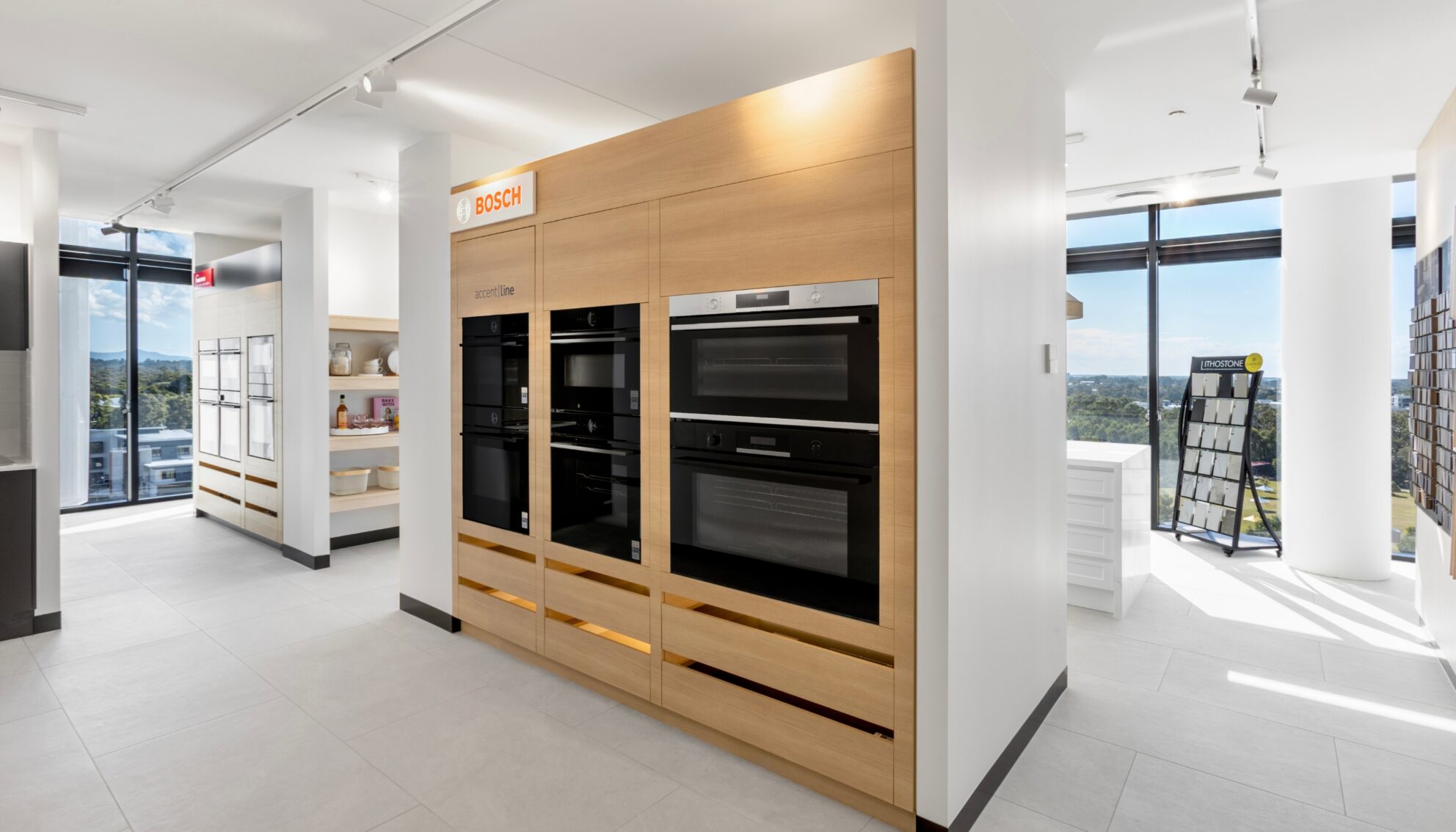
Both the Harmony and Inspire Luxury inclusions packages at Hallmark Homes are built around Bosch appliances. This is a deliberate choice. Bosch is one of the most trusted appliance brands in Australia, with a long-standing reputation for quality engineering, reliability and after-sales service. Selecting a single premium brand for the appliance suite also ensures visual consistency across the kitchen, which matters in a new home where the aesthetic has been carefully considered.
The Harmony inclusions provide a well-specified, functional kitchen appliance suite suited to everyday family life. The Inspire Luxury inclusions step up to Series 4, Series 6 and Series 8 Bosch appliances, with the addition of pyrolytic cleaning, induction cooktops and premium integrated rangehood options. For those who spend significant time in the kitchen, the difference in day-to-day experience between the two packages is meaningful.
Reading specifications and comparing features online is useful, but it rarely replaces the experience of standing in front of an appliance and understanding how it looks and feels in the context of a real kitchen. The quality of a pyrolytic oven door, the smooth glide of an induction cooktop surface or the visual impact of an integrated rangehood are best understood in person.
At Select by Hallmark, our dedicated customer selection centre, you will find a curated range of appliances and kitchen finishes on display, with design consultants available to walk you through the options and help you make decisions that suit your lifestyle, your layout and your budget. The appointment is available exclusively to Hallmark Homes clients and is one of the most valuable parts of the building process.
If you are ready to start thinking about your kitchen, take a look at the Harmony and Inspire Luxury inclusions pages to understand what is included in each package, or visit one of our display homes across Brisbane, the Gold Coast and the Sunshine Coast to see how our kitchens come together in a real home setting.
Hallmark Homes builds single-storey homes across South East Queensland. To find out more about our home designs or to speak with a sales consultant, get in touch with the team today.
This blog is for inspirational purposes only and may feature non-standard items that are not included in the Harmony or Inspire Inclusions Range. Decorative items such as furniture, homewares and some appliances are not included. Pricing, materials, suppliers and specifications may be subject to change without notice. This blog is a guide only. Please refer to your contract for all final inclusions.